Ok, everyone’s got a top 10 list these days; no claims of originality here. I had my first list last year and thought I would do so again for 2012. This year however, it just made sense to me to make it a Top 12; 12 for ’12. So here we go.
2012 was a little slow for me as far as photography went. Knee surgery at the end of 2011 completely stymied any photography outings until early May when I made my first visit of the year to Yosemite. As you might guess, Yosemite is my favorite place; not only to photograph, but just to be there; just to walk the meadows, sit by the Merced and of course drink from the Fountain at Fern Springs. Yes, it is one of those places that most times is simply overrun with people. But anyone who knows Yosemite also knows when to go and where to go to lose themselves and feel like you are the only inhabitant. It is a special and magical place.
In recent years I’ve set out to learn how to “see” Yosemite by photographing the little nuances and intimate scenes that really make it a special place; really get to know the light, the backdrops, combing all the different elements and moods. And in a place like Yosemite with monstrous granite domes and towering waterfalls, it’s nearly impossible to not look up and marvel at the grand landscape. So at the end of 2012, I felt I was getting closer to my goal of showing the quieter and more intimate side of Yosemite; and not just the obvious. I don’t have a single image this year that shows El Capitan, Half Dome, Bridal Veil or Yosemite Falls. Some images are distinctly Yosemite, while others not so.
It wasn’t easy choosing 12 out of the 50 or so images I thought were decent enough to scan and process. Here are some of my favorites from 2012:
“El Capitan’s Court” may be my favorite of the year. Not necessarily because it’s the best image or most spectacular – it’s certainly nothing extraordinary as far as subject matter, composition, etc. This image just means more to me personally. I felt like this image captured so many of the wondrous elements of Yosemite and specifically Yosemite Valley. From the stately and brittle Black Oaks, the delicate and diversity of grasses and plants of the meadow floor, to the Ponderosa and Cedar, the guardians of the valley, all in the shadows of the towering walls of granite. A simple landscape – yet showcasing Yosemite in all her glory.

El Capitan’s Court, Yosemite NP. #42113SVSTOR
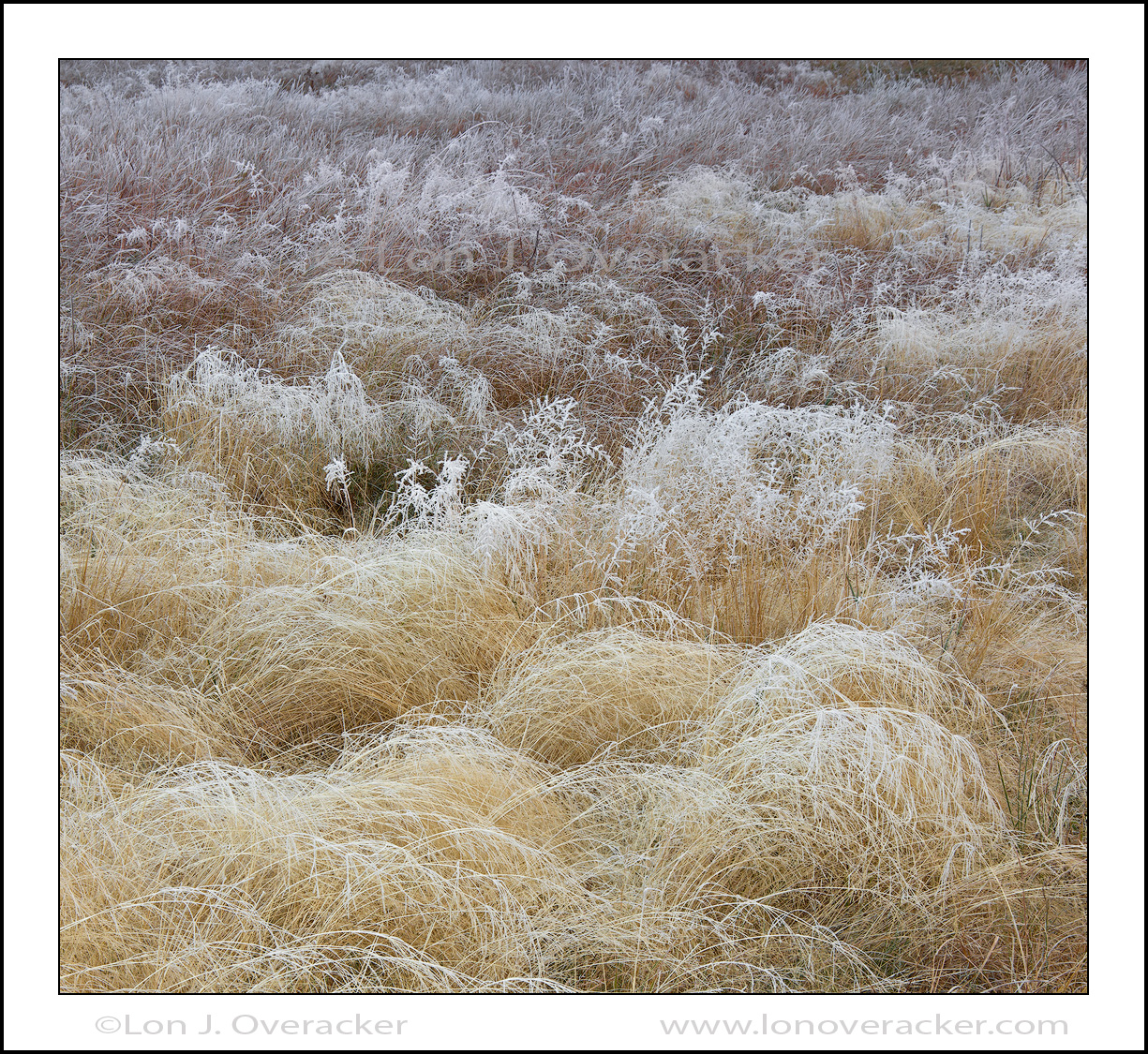
During my last photo outing of the year, I had a goal of really trying the capture the grace and elegance of the grasses of Yosemite Valley. Four days in early November and many hours wandering Leidig and El Capitan Meadows and I felt like I was able to capture some of that. No powerful or dynamic sunset or spectacular light; just some elegant details of a place that far too often simply get overlooked and most certainly stepped over. 😉

Meadow Elegance, El Capitan Meadow,Yosemite NP. #42124SH
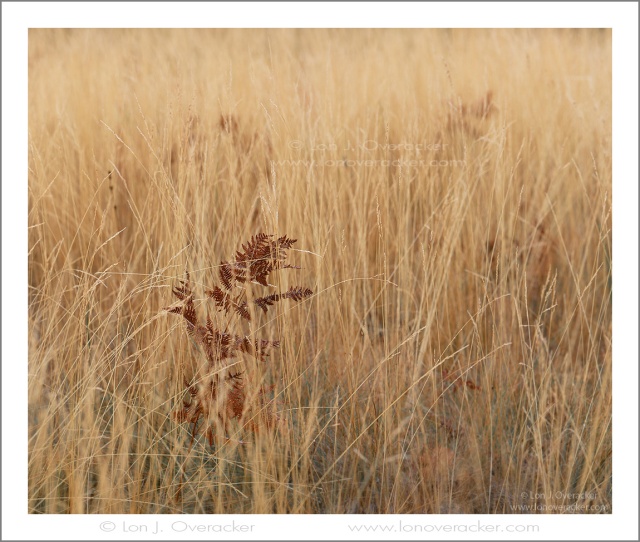
A Fern Among the Grass, El Capitan Meadow,Yosemite NP. #42126SHCR
These grasses and ferns weren’t found in a meadow, but right along side the Merced River. In a little garden patch that is only revealed at the end of the fall season when the water level has dropped, the waterfalls have dried up, and the Merced is but a trickle. This particular year saw the lowest water levels in the river I had ever seen. This revealed so many new scenes and opportunities for little gardens like this to photograph. Already by now this little garden is underwater as the winter storms have started bringing flowing waterfalls back to Yosemite.
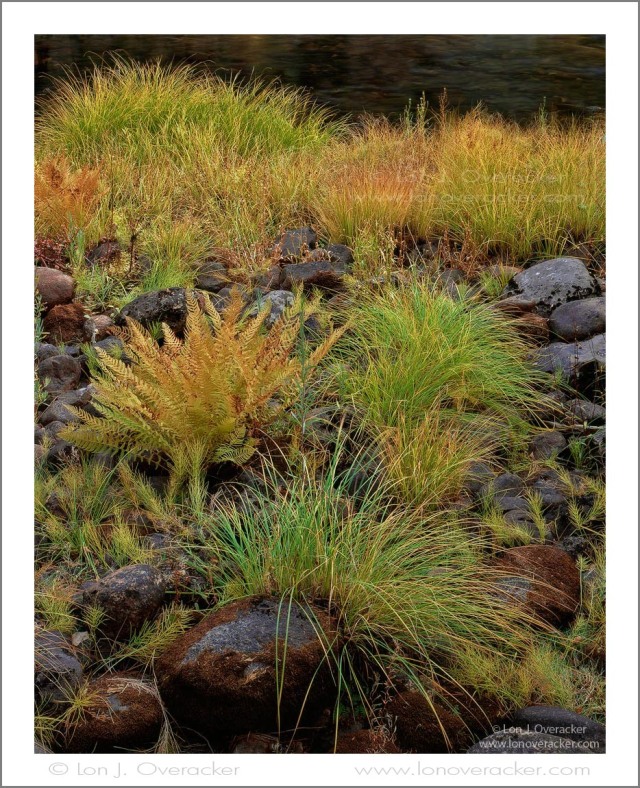
Little Garden on the Merced.Yosemite NP. #42103SV
Speaking of the Merced River… another major element I forgot to mention in the first image. While you can’t see the river in “El Capitan’s Court,” the Merced lies just a few steps beyond the Black Oak trees. For me at least, the Merced River is the lifeblood of Yosemite Valley; perhaps even more so than the valley walls themselves.

Dogwood Pastels, Yosemite NP.#42060SH
And to all the waters that feed the Merced River; The water falls, Bridal Veil, Yosemite, Cascade, Horsetail Wildcat falls, and even Fern Springs, the Merced, gives and sustains life to all those who call Yosemite home. During the spring the waters creating a rushing torrent of power and change; while in the fall and early winter, just a trickle, yet still giving of life.

Gentle Cascades, Bridal Veil Creek,Yosemite NP. #42071SH
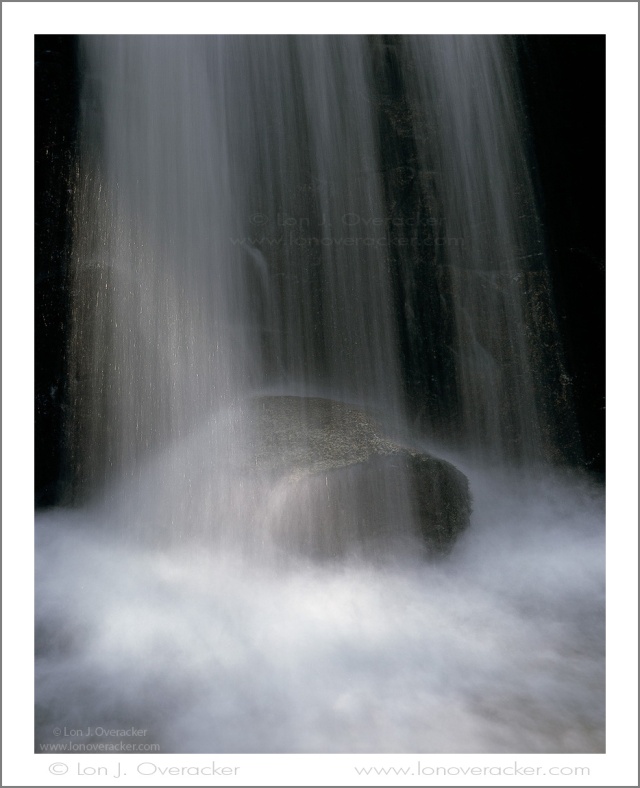
Pool of Light, Wildcat Falls,Yosemite NP. #42070SV

Standing Firm Against the Raging Merced. #42012SH
Trees have long been a favorite subject of mine. And the trees of Yosemite make it that more special to me as I love photographing the trees of Yosemite. So my Top 12 list certainly would include some trees. Included in this list is one of my favorites just below, “Autumn Dimensions.”

Autumn Dimensions, Yosemite NP.#42085SV

Twin Oaks Autumn II, El Capitan Meadow,Yosemite NP. #42097SV
I included this snag of an old Black Oak for a couple of reasons. One, was about capturing the fleeting light that so often happens – of course not just in Yosemite. But those dynamic moments when light comes and goes, the clouds quickly moving through creating constantly changing light. Yosemite seems to have the market cornered on changing light. How does the saying go? “If you don’t like the light now, wait two minutes…” Here, the light was changing fast and for brief moments lighting up this old tree as if a spotlight from above had the oak on center stage. So, it was about the light and secondly getting this accomplished with a film camera… well, sometimes you just need to be lucky, or burn lots of sheets of film. I think I made 4 exposures. Lastly, I don’t shoot with b&w film, but I often find myself wanting to, or envisioning scenes in black and white. This was one of those times; the contrasts, tonal ranges with the near stark white trunk and the fleeting light, I knew would be stronger without color. Yeah, just a tree, but a special one now.

Spotlight on Black Oak, El Capitan Meadow,Yosemite NP. #42025SVBWBL
Last, but not least, the oddball of the Top 12. Odd, only because it’s the single image I didn’t select that wasn’t from Yosemite. One of only three photo outings in 2012, remember, I said it was a slow year. This image was captured on a little unnamed rocky beach in Garrapata State Park along the Big Sur Coastline of central California. The combination of light, color, motion and texture make this one of my favorite images of 2012.
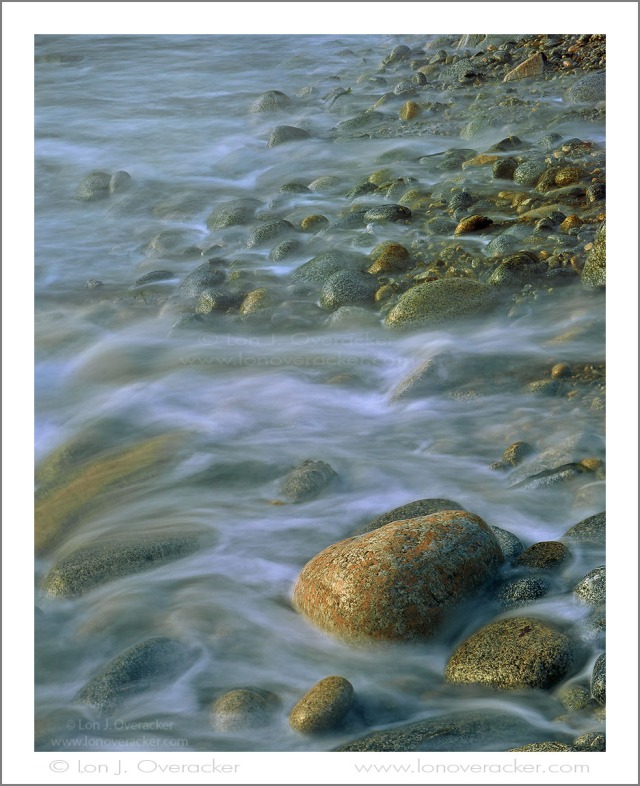
Surf and Stones, Garrapata SP, CA.#4208082SVBL
It was hard to get this down to only twelve images. For those who are interested in seeing what the rest of the year was like, including many more images from Yosemite, you can go to my website and visit the “New Work Gallery” OR I also have them up on G+ where you can see the photo album, “2012, A Year in Review.”
Thank You! All my best in 2013!






 lonoveracker.wordpress.com